
SPONSORED CONTENT
AI is the buzz, the promise, the future. In dairy, it’s already reshaping forecasting, route optimization, yield analysis, and margin management. But beneath all the excitement lies a quieter—and far more immediate—problem:
If your supply chain data is stuck in someone else’s system, your AI models aren’t just limited. They’re useless.
Gartner found that nearly 60% of AI projects fail, not because of bad models, but because of bad or inaccessible data. In dairy, that’s amplified by technology applications that were never built for portability, transparency, or raw data access.
So while leaders are betting big on AI, most don’t realize the real issue isn’t the model — it’s data ownership. No matter how sophisticated the AI, it can only be as good as the data it’s built on. And without control over your data, even the best AI won’t deliver the insights you need.
You can’t optimize what you can’t control
Think about the software you use to manage your supply chain. If your AI team asked for a full, raw export of operational data—milk sourcing, logistics, quality metrics—could you get your hands on it immediately?
Or would you be told:
- “We can export that… but only in our format.”
- “That data isn’t accessible directly—you’ll need to submit a request with the vendor.”
- “Yes, but the report will need to be built, which will take time.”
These aren’t edge cases. They’re industry-standard responses—and they’re quickly undermining the very systems companies are counting on to power smarter decisions.
The illusion of digital transformation
Most technology vendors promise end-to-end digitization. But behind the slick interfaces, many trap your data in closed formats, slow processes, and vendor-controlled infrastructure.
The result? Even basic tasks—like editing a data error, generating a new report, or integrating a new analytics tool—can become weeks-long ordeals.
And if you ever need to switch platforms? Prepare for a painful, manual, expensive migration. Because data mobility was never part of the deal.
Caught in a data paradox
You are under pressure from every direction: margins are tight, compliance demands are growing, and AI is expected to unlock smarter, faster decisions across your supply chain. But here’s the paradox: just as data becomes most critical, it becomes hardest to access—fragmented, delayed, and fenced in by systems you don’t fully control.
That’s not a future risk. It’s happening now.
Before placing your next big bet on AI, ask your team—and your software providers—these five questions:
- Can we access every raw data point when we need it — without delays, restrictions, or hidden fees?
- Can our teams correct critical data directly, or are we stuck waiting on vendor support?
- If we needed to switch systems tomorrow, could we take our data with us — cleanly and completely?
- Can we build and modify reports without vendor intervention?
- Does our data integrate freely with the tools we choose—or only the ones our provider supports?
These aren’t just operational annoyances. They’re structural flaws. And if their answer to any of them is “no” or “maybe”, your AI roadmap may already be at a dead end.
A better model: What great data ownership looks like
Leading dairy processors are realizing this, choosing systems that treat data not as a byproduct, but as a strategic asset. They’re embracing platforms built for openness from day one, with data portability, transparency, and interoperability at their core.
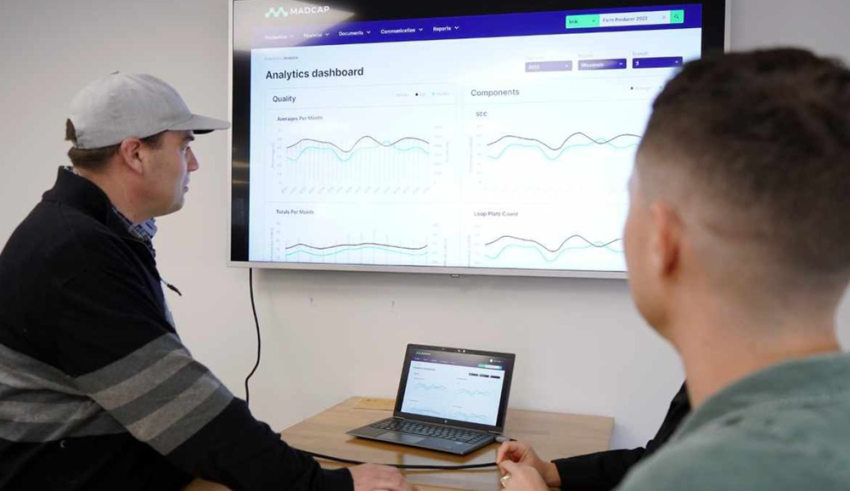
MADCAP is one such platform—a global software solution designed specifically for the dairy industry to optimize and manage every aspect of the supply chain from farm to factory. Operating in the U.S. since 2009, MADCAP puts this approach into practice.
At its heart lies a simple belief: your data belongs to you. It should flow as freely and transparently as the milk you produce.
In practical terms, that means:
- Open, unrestricted access to your full data set—no permissions needed
- Structured, clean data exports that integrate with any tool
- Self-service data editing, eliminating bottlenecks and delays
- An API-first design that plugs seamlessly into your tech ecosystem
It’s not just theoretical. Six of the world’s top ten dairy processors already rely on MADCAP for exactly that reason.
As one leading MADCAP client in the U.S. put it:
“Having real-time API access and an open SQL database means we can run our analytics tools directly on our milk sourcing data. The insights we gain give us a clear competitive advantage.”
That’s what real control looks like.
Final thought
You wouldn’t accept delays, dilution, or dependency when it comes to milk. Why tolerate it from your data?
Digital transformation without data control is just a glossy cage. And AI without data access is a fantasy.
The real competitive edge lies in owning your data — fully, freely, and forever.
Not there yet? Maybe it’s time to rethink your foundation.
See how leading processors are already making the shift: watch the video to learn how MADCAP is centralizing dairy procurement from farm to factory — and meet the MADCAP team this June at the California Creamery Operators Association 125th Annual meeting.

