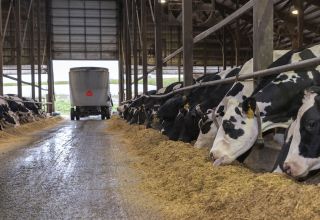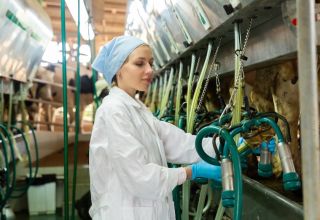
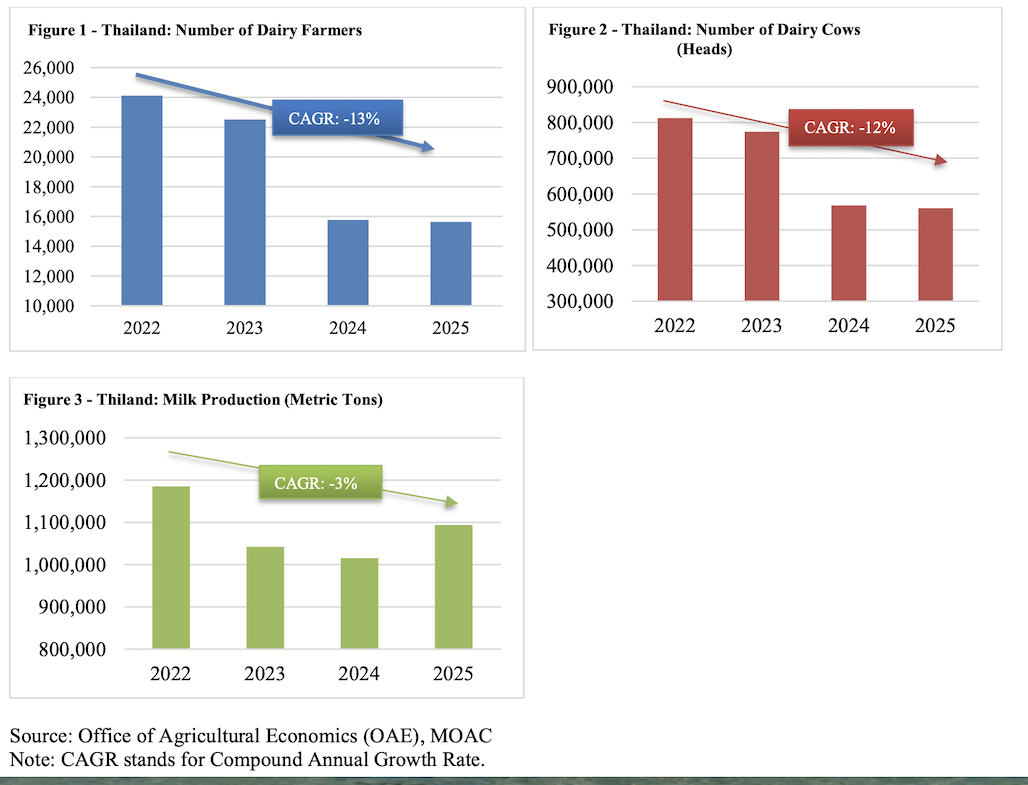
Thailand’s Ministry of Agriculture and Cooperatives (MOAC) reported that in 2025, the country had 15,638 dairy farmers (Figure 1) and a total dairy cow population of 560,551 (Figure 2), of which 44% were in-milk. Smallholder farmers managing herds of fewer than 20 cows produce most of the country’s fluid milk.
Thailand’s dairy industry continues to face significant challenges: high production costs driven by feed and energy expenses, declining domestic demand that remains heavily dependent on the national school milk program, and competition from imported products that are both cheaper and higher in quality. Limited capital constrains farmers’ ability to absorb rising feed costs or invest in new technology, widening the quality gap with imports. Low milk-solids content in domestic milk further limits processing efficiency and yield for high-value products like butter and cheese. According to contacts, shrinking school milk demand and rising reserves compound these pressures, weakening profitability and is reportedly driving farmers out of the sector with milk surplus being poured out, used as animal feed, or converted to fertilizer.
Saraburi, Nakhon Ratchasima, Lopburi, Chiang Mai, and Ratchaburi are Thailand’s top milk-producing provinces.
Opportunities for U.S. Exporters
Thailand’s growing health-conscious consumer base has fueled rising demand for protein-fortified milk and whey protein, with the United States a leading supplier of Whey Protein Isolate (WPI) to the market. U.S. cheese products have also gained traction as Thai consumer preferences shift toward Western flavors — notably pizza, burgers, and even cheese-topped instant noodles. Mozzarella remains the most widely consumed and familiar variety, while others, including ricotta and burrata, are steadily gaining popularity (TH2025-0024).
According to industry resources, liberalizing U.S. corn and other feed ingredient imports could lower feed costs for Thai dairy farmers, which would improve their margins and reduce the cost of producing each liter of milk. Imported feed additives, which Thailand still relies on because they use more advanced technology and fermentation, could help heat-stressed cattle maintain rumen function, performance, and consistent product quality. Additionally, sources report that U.S. dairy cattle genetics could also raise milk yields and lower operating costs through selective breeding.
Click here to see the full report. — Story by Nitta Sae-lao, USDA Foreign Ag Service